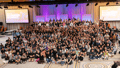
The best ideas don’t happen in a vacuum, and that’s especially true when companies are building a new product.
Just ask Alyssa Esteban, a senior product designer at Fora Travel, a travel tech company. According to Esteban, the product team sees customer collaboration as integral to the design process.
“We have the incredible luxury of building alongside travel advisors at every stage of their entrepreneurial journey,” Esteban said. “They’re vocally invested in creating a best-in-class product with us. Their firsthand perspective, our company vision and our product execution turn strong ideas into products worth using.”
Steven Pochapin, a senior engineering manager at pet health and nutrition company The Farmer’s Dog also views cross-departmental collaboration as the quintessential ingredient in turning ideas into tangible products.
“Collaboration isn’t a stage here; it’s the whole thing,” Pochapin said, noting how departments like product, design, marketing and customer care stayed in constant contact during the launch of Instant Fresh, a shelf-stable, dry dog food that turns into a rehydrated meal when you add water.
Built In spoke with product professionals from Fora, The Farmer’s Dog, Playground and Regal to see how growing product teams turn ideas into innovation.


Fora Travel is a modern travel agency that offers a comprehensive platform designed to empower individuals passionate about travel to build successful businesses.
What new technologies or frameworks are helping your teams move faster and build smarter?
Fora empowers travel entrepreneurs with AI-enabled workflows, reliable infrastructure and a global community of experts. At headquarters, we move faster with better tooling and a foundation built for speed.
Every employee receives access to Granola and Wispr Flow for faster notetaking and context-sharing. The product team uses Claude Code for quick wins across our platforms and prototyping for concept approvals. Claude Design may assist with company presentation decks, wireframes and animation.
Great tools accelerate innovation, but a shared foundation keeps independent work consistent. Over the last year, I built Atlas, our new design system of accessible brand colors, typographic scales and reusable web components. Speed never costs us consistency, no matter who’s building. It’s the contribution I’m proudest of at Fora!
Building smarter comes from Fora’s humans plus technology framework. The legacy travel market insists you pick one — high-touch human service or efficient technology. The next generation of advisors needs both. Fora pairs well-designed technology with advisors and product teams who bring first-hand experience technology can’t replicate.
How do you balance experimentation with reliability in your development process?
We’re encouraged to experiment, pitch and play fearlessly. That freedom lets us build product experiences that convert advisors, ease their workflows and expand our offerings. Some now-beloved Fora features started as IC-led initiatives or hackathon projects.
We keep experimentation honest with data, both qualitative and quantitative — user interviews, surveys, beta groups and metric tracking, to name a few.
Reliability is where we draw a hard line. We have a fiscal responsibility to our network of advisors and we take it seriously. Our suite of business management products keeps their businesses running. Memorable trips all over the world are powered by Fora. We experiment freely on top of a stable foundation and we never gamble with the systems advisors depend on. That discipline is how we keep their trust.
What role does collaboration play in turning innovative ideas into products?
Great products are rarely built alone. As a designer, I love to explore options. I draw on my own experience and the expertise of my product and engineering partners to imagine what our products could be. No idea is off the table in early ideation. Then reality sets in and we debate approaches and scope until we land on something better than any one of us could have made alone.
We have the incredible luxury of building alongside travel advisors at every stage of their entrepreneurial journey. They’re vocally invested in creating a best-in-class product with us. Their first-hand perspective, our company vision and our product execution turn strong ideas into products worth using.
Recently, my product managers proposed a new product for advisors and their clients. I spent two weeks crafting counter-proposals for specific flows and understanding how different rollout sequences might shape feature usage in the interim. Our engineers investigated the engineering impact and their constraints shaped the product scope against a realistic timeline. None of us could have come to the shared solution alone and our product is better for it.
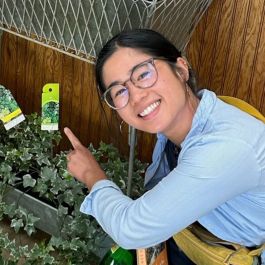
Playground is a platform for childcare providers to streamline their operations.
What new technologies or frameworks are helping your teams move faster and build smarter?
Claude and Cursor are part of how we design and build things here at Playground every day. I recently worked with our engineering team to improve how AI uses components. We did this by improving our design system in the codebase to make it harder for AI to guess or invent new components. This requires continued investment in our design system, but it’s already cutting down on a lot of the back-and-forth between design and engineering!
How do you balance experimentation with reliability in your development process?
Playground’s goal is to give admins everything they need to run a childcare business from one place. So we try to avoid reinventing user behavior when an established pattern already works well for things like running a customer relationship management [tool]. We’re also aware that childcare centers have unique needs; therefore, we ship improvements in small increments so we can learn fast and improve based on feedback we get from customers directly.
What role does collaboration play in turning innovative ideas into products?
We have a public channel called "design-review" in our Slack where designers post work-in-progress and get feedback from other teams before any code gets written. In a recent post, for example, someone raised a question about touch devices that I hadn’t considered and I ended up landing on a simpler design than the one I walked in with. Childcare covers such a wide range of use cases and expectations, so getting other teams’ feedback early saves engineering time down the line and catches confusion we wouldn’t have spotted on our own.

Regal is an AI platform that empowers companies to transform customer communications with AI agents.
What new technologies or frameworks are helping your teams move faster and build smarter?
The major unlocks for AI so far have been in product discovery and expanding what our product team can say yes to. We use agentic coding tools, such as Cursor, primarily to analyze the Codebase and ship features. For example, using our agentic coding clients with the DataDog model context protocol means that when we have a question about a bug in a particular workflow or a behavior in our product, we can just ask the coding assistant to perform the full analysis for us. It pulls the logs from DataDog, knows the logic of how the code works from our repo and is able to output an artifact in 10 minutes that clearly summarizes the issue, which would have taken a product manager days before and access to a data analyst.
Beyond that, coding assistants have enabled more customers to submit feature requests. UI enhancements, which were previously hard to prioritize, can now be instantly developed with AI, so our team only has to review pull requests. We’re building a pipeline from feature requests in Notion to pull requests in Cursor to fully automate these UI enhancements. It means we can better serve our customers and make our product more custom to their use case.
How do you balance experimentation with reliability in your development process?
Building a voice AI agent is similar to launching a new app. Launching the first version is only the beginning, but it requires constant iteration to get to the version of the agent that is truly optimized for the conversation. To achieve this, we have built experimentation directly into our product. Our customers can use our variants feature to test new agent features and understand the exact impact on transfer or containment rates for any change they make.
We use this to reliably conduct rapid experimentation. We will quickly test new LLMs, speech-to-text models and other agent behaviors as variants, measure the impact and once we have confidence that nothing has degraded, roll them out to 100 percent of traffic.
What role does collaboration play in turning innovative ideas into products?
It really comes down to having context. At Regal, we have AI specialists who use our software to build AI agents for customers. They are in our tools every day and, as a result, have the best context for what our AI agent builder does well and where it falls short.
In a recent example, one of our most important customers asked for a more sophisticated intent-classification model than we had ever built to identify the correct support category during a live call. The model we wanted to use on the agent was a less sophisticated LLM, which was great for voice but not for this intent-classification use case. The AI specialist was resourceful and ended up using a dual-model architecture for this agent to achieve high-quality classification while preserving the less sophisticated model’s voice quality.
Once our core voice AI research team saw this, we looked at how to incorporate the dual-model architecture into our first-class product. It was an idea discovered only through our frontline AI Specialist team, working closely with our voice AI research team, to solve this.
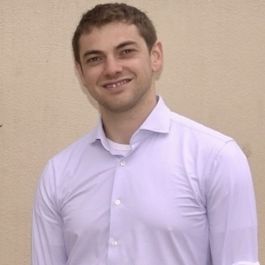
The Farmer’s Dog is a pet health and nutrition company that delivers healthy food options for pet owners.
What new technologies or frameworks are helping your teams move faster and build smarter?
Two things have really changed the day-to-day. The first is Claude, which our engineers use for development and for automating processes across the stack. The interesting part isn’t how much time it saves, it’s where the time went instead. We spend more of the day on design now and less of it typing out implementation, which means we’re thinking harder up front about how something will be extended and maintained a year from now. We’ve also started designing with Claude in mind, laying systems out so the next expansion is something Claude can pick up and carry, so new features arrive fast and don’t rot.
The second is “temporal.” Subscriptions are long-running processes that have to survive retries, partial failures and deploys and for years that meant stitching together cron jobs and queues and hoping. Now we write them as durable workflows with failure handling built in. Our pipelines are steadier for it and we can ship customer experiences we wouldn’t have risked before.
How do you balance experimentation with reliability in your development process?
We shadow everything. Before an experiment reaches a customer, the new code runs in production right alongside the old code. The customer still gets the old result and we log a comparison of the two. It’s the difference between knowing how a change behaves under real traffic and guessing from a test suite. Once the data looks right we flip it: the new code serves customers, the old code keeps running in the shadows and we keep watching for differences.
While it’s shadowed, new code fails open, so a surprise error falls back instead of breaking someone’s order. We gradually ramp up rolling out the new code to everyone and rolling back is always a single toggle, never a runbook someone has to read at 2 a.m.
None of this is caution for its own sake. One incident can cost weeks of cleanup that a day of shadowing would have prevented. Shadowing is what lets us move fast without gambling with a dog’s next meal.
What role does collaboration play in turning innovative ideas into products?
Collaboration isn’t a stage here, it’s the whole thing and the launch of Instant Fresh is the clearest example we have.
Our product development team built an entirely new food format, refining it on feedback from employees and, more importantly, their dogs. While that was happening, engineering sat with product managers and designers working out what the customer experience should feel like. That question turned out to require rebuilding how subscriptions work at The Farmer’s Dog. The old model assumed one format and we needed one that could flex, so we rebuilt it in a way that opens doors we haven’t walked through yet.
The whole time, we stayed in the room with product, design, marketing and customer care, discussing how we’d market it, how we’d onboard someone new, what an advisor would need on day one. Everyone weighed in at every stage instead of receiving a handoff at the end. That’s why what we launched was fully thought through and why the whole company was behind it.